Business Integrity & Legal Series|
What Should You Really Look for in a “Luxury Sales Contract”?
By KÉSH TEAM
Written / KÉSH Luxury Authentication Team
In Taiwan and Paris, we often say that style is a long conversation with oneself.
Today’s stylish women gladly spend countless evenings decoding a vintage bag’s seasonal price, date stamp, and leather grain—treating it as an extension of personal taste.
Yet in the final moment before closing,
what truly allows that elegance to land with certainty is a document that defines ownership and responsibility—
one that lets both sides feel secure: the luxury sales contract.
For most collectors, a contract seems little more than a tedious page in checkout—
something to skim quickly and tick “I agree.”
But true elegance is knowing how to wrap romantic sensibility in rigorous structure.
On the path to top-tier collecting, what builds a solid bridge between parties
is not a warm verbal promise in a private message, but clear rules in black and white.
As high-value pre-owned luxury trading, vintage sourcing, and cross-border collecting grow more common,
transaction amounts stretch from tens of thousands to hundreds of thousands—even over a million.
When passion enters a higher realm,
our definition of “trust” should upgrade accordingly—
rooted in clearer, better-protected, more transparent processes.
Why Do High-End Luxury Transactions Need a Formal Sales Contract?
Luxury carries master-level craftsmanship and enduring heritage. Every detail of the transaction deserves to be handled with care and grace. When a dream piece is delivered, a well-structured sales contract gives both sides a clear map of collaboration:
- Confirmation of authenticity and maison craftsmanship
- Shared understanding of wear marks and structural condition
- Verification of accessories and original repair records
- Clear allocation of responsibility in consignment and pre-owned sales
- Proper protection throughout international delivery
- Payment security and rights retention for online transactions
The irreplaceable value of a sales contract
is that both parties know their responsibilities and boundaries before the deal begins.
In the refined world of luxury, the more transparent the process,
the more composed each acquisition feels.“
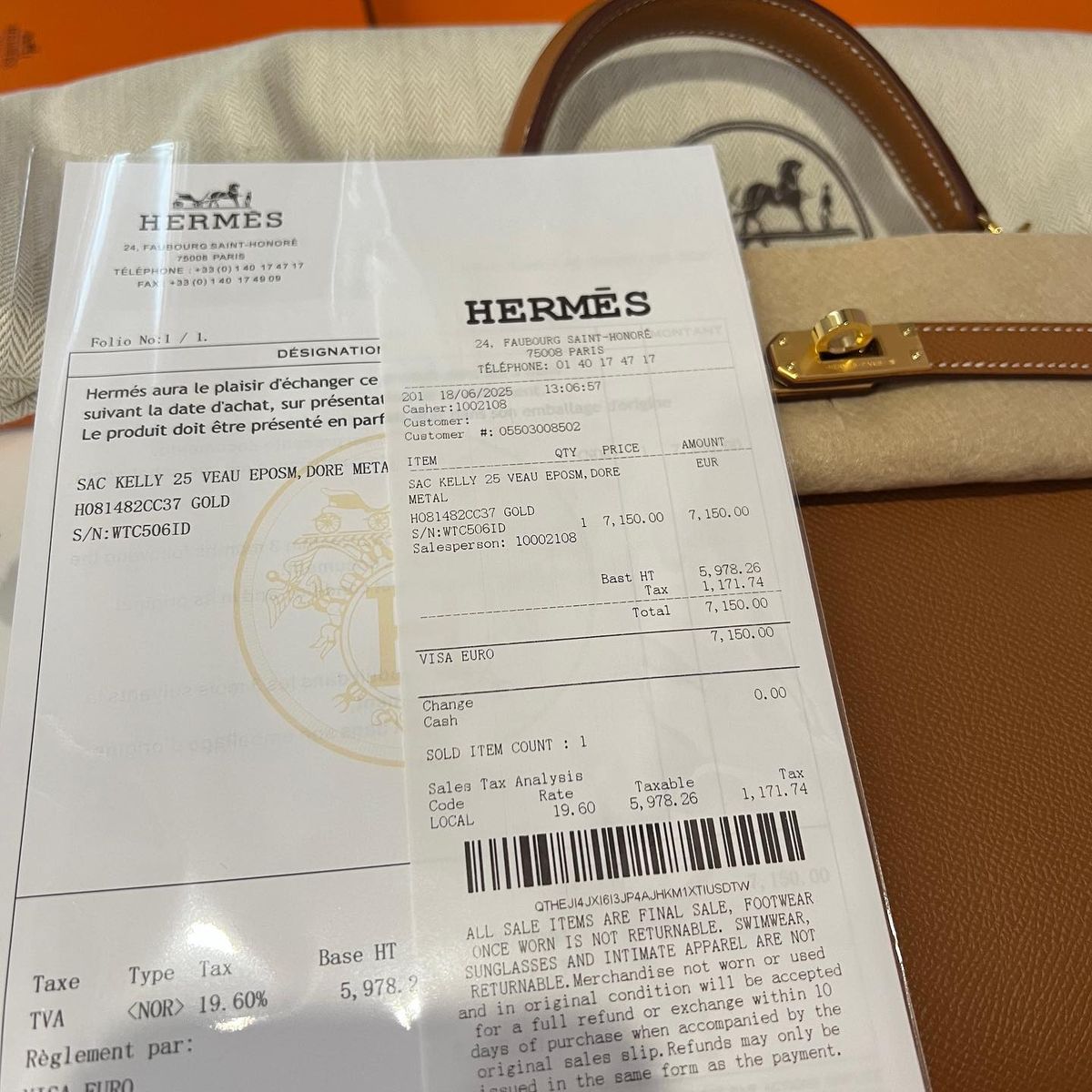
“What a Truly Complete Luxury Sales Contract”
Should Include at Minimum
French reason tells us:
a proper luxury sales contract must never be vague in structure.
It must contain these three core pillars:
1. Product Information Must Be Clear and Data-Driven
In the vintage and pre-owned market, everyone’s understanding of a piece sits on a different horizon.
On a truly professional, rigorous platform, contract product information is clear and standardized—
each of the following must be verified:
- Basic specifications: brand name, exact model, dimensions, color.
- Craftsmanship features: year of manufacture, artisan stamps, hologram or anti-counterfeit chip numbers.
- Condition: accessories included (receipt, dust bag, box, etc.), detailed bag condition.
A professional platform presents every detail honestly:
including natural leather wear, hardware condition, and whether maison renovation has been done.
The clearer and more transparent the product details, the more at ease the collecting journey.
2. Choose Secure Third-Party Payment Protection
The rarer and higher the value of a collection, the more you should prioritize a legitimate trading platform, third-party secure payment, and
a traceable payment trail. This is not mere process fussiness—it is the most dignified, formal legal protection for both parties’ assets.
Payment traceability safeguards the buyer’s protection and rights at the moment of payment.
3. Clearly Define After-Sales Responsibility
Luxury is not ordinary apparel. Once many high-value pieces are sold,
after-sales responsibility must be even more clearly defined.
The contract should expressly include:
- After-sales terms: principles for handling post-sale matters and related rights.
- Inspection process: procedures for authenticity issues and how responsibility is allocated.
- Delivery confirmation: responsibility during shipping and procedures upon receipt.
Customers should be clearly informed to verify contents, accessories, and condition—and only proceed once both sides share the same understanding.
A truly mature luxury transaction always leaves a complete process record.
On the path of taste, transparent documentation itself is the finest risk management—
and the gentlest protection for collectors.
On Integrity and Trust,
KÉSH de¹ Would Say This:
A sales contract has never been mere paperwork for compliance.
It is a solemn confirmation of craftsmanship, of the transaction—and of “trust” itself.
Because a brand with true confidence dares to stand in the sunlight of law and integrity.
We insist on presenting each piece as it is, without embellishment, and on issuing seller contracts with legal force.
Because a truly stable trading relationship
comes from this:
Both sides clearly know the rules.
From macro-level disclosure of product details,
to third-party payment security, to final delivery records—
every step should be clearly preserved.
A luxury platform that truly hopes to accompany collectors for the long term
will not focus only on the instant of closing;
What we value is
whether, after every transaction,
the trust built through transparency still stands with ease.
KÉSH de¹ Has Always Believed
A truly mature luxury transaction is not built on the piece alone.
It is also built on:
* Clear information
* Complete process
* Honest disclosure
* Verifiable records
From product details and payment methods to transaction documents,
every step